5540 River Road, Donalsonville, GA 39845

Strolling through the trails at McFadden Nature Center, it’s common to spot particularly large, distinctively colored, bushy-tailed squirrels bounding across the ground. And during mating season, you might see them chasing each other up trees in dramatic displays of agility. Chances are, you’ve encountered the fox squirrel (Sciurus niger), the largest tree squirrel species in North America. Often mistaken for their gray squirrel cousins, these fascinating creatures blend quirky behaviors, impressive survival tactics, and an essential role in forest ecology.
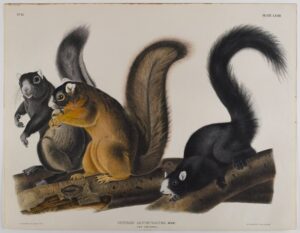
Fox squirrels are well known for their remarkable color variation. While most have a brownish-gray to brownish-yellow coat with an orange-hued underside, they are the most variably colored squirrel species in the world. Some even develop striking all-white or all-black coats. Their coloration is determined by a mix of black, silver, and red hairs, but one feature remains fairly consistent: a distinctive dark facial mask around the eyes and nose. A few years ago, while visiting Washington, D.C., I came across an all-black fox squirrel, the most beautiful squirrel I had ever seen! Here at McFadden Nature Center, we’ve even spotted an all-black fox squirrel and another with a striking black face and white nose. Getting a good picture of them is tricky, as they’re quick to dart away before we can raise our cameras.
Unlike gray squirrels, fox squirrels prefer open woodlands near clearings rather than dense forests. This makes McFadden Nature Center’s landscape an ideal habitat, and they’re frequently seen along the wooded edges of trails. They spend much of their time foraging on the ground and establish home territories spanning a few acres, where they remain for their entire lives. Though they share habitats with gray squirrels, the two species do not interbreed.
Fox squirrels are noticeably larger than gray squirrels, measuring 12–15 inches in body length with an additional 8–13 inches of glorious tail, and weighing between 1.1 and 2.2 pounds. Their long, bushy tails serve multiple purposes: they help with balance while scampering along tree branches, double as a cozy blanket in winter, and even act as a communication tool, signaling intentions and emotions to other squirrels.
Anyone with a bird feeder knows the challenge of keeping squirrels from raiding it! Fox squirrels, like their gray counterparts, love seeds, but their diet is incredibly varied. They feast on acorns, nuts, seeds, fruits, buds, flowers, twigs, bird eggs, insects, and even fungi. Their foraging habits are vital to the environment, as they engage in a behavior called seed caching, burying excess food for later use. If you’ve ever seen a squirrel energetically digging in the ground with full cheeks, it’s likely storing food. Fox squirrels have remarkable memory and recover most of their buried caches in the winter. However, some caches remain forgotten, allowing buried nuts and seeds to sprout into new trees, inadvertently aiding in forest regeneration.
Mating season for fox squirrels occurs twice a year, from October to February and again from April to August. At McFadden Nature Center, you can spot the signs of mating season in full swing, from playful chasing to vocalizations echoing along the trails. Males engage in competitive chases and scent-marking displays to attract females, but the final choice rests with the female. Once pregnant, she seeks out a secure nesting site, and after a 44-day gestation period, she gives birth to a litter of 2–5 young. The babies are born blind and helpless, relying entirely on their mother’s care until they are weaned at around 10–12 weeks old. If you ever find an orphaned baby squirrel, the Georgia Department of Natural Resources can provide guidance, and the closest wildlife rehabilitator for squirrels is St. Francis Wildlife Association in Quincy, Florida.
Fox squirrels are primarily solitary creatures, preferring to go about their business alone. They typically only interact during mating chases or when abundant food sources bring them together. When they do cross paths, a pecking order is quickly established, especially among females, who generally avoid each other altogether.
Life as a fox squirrel isn’t easy. A variety of predators including hawks, owls, snakes, and foxes, keep them on high alert. Their keen vision and hearing allow them to detect threats, often pausing mid-forage to scan their surroundings. When danger strikes, their powerful hind legs propel them into impressive leaps, and their coloration helps them blend seamlessly into their environment. Unfortunately, one of the most common threats to squirrels today is road traffic. Many of us have experienced a near-miss with a squirrel darting unpredictably across the road, an all-too-common hazard for these creatures.
Fox squirrels are more than just adorable woodland acrobats, they play a vital role in maintaining healthy forests. By burying seeds and nuts, they help disperse tree species and promote biodiversity. However, habitat loss poses a threat, particularly in the southern United States. With only 10–20% of their original habitat remaining due to logging, development, and changes in fire management, conservation efforts are important for their continued survival for generations to come. While they are not currently listed as endangered or threatened, preserving their habitat is essential to ensuring they have the space they need to thrive.
Next time you spot a fox squirrel rummaging for food, darting across a clearing, or flicking its bushy tail in warning, take a moment to appreciate these remarkable creatures. They are not only a delight to watch but also an essential part of our ecosystems, helping shape the very forests they call home. We are thrilled to have a strong population of these beauties at McFadden Nature Center, and we hope you enjoy spotting them on your visit. If you manage to capture a good photo, consider yourself lucky!